Remote Work Defined My Life
After twelve years, remote work is no longer a perk or a work arrangement. It is the thing that shaped where I lived, whom I met, and what I am building next.
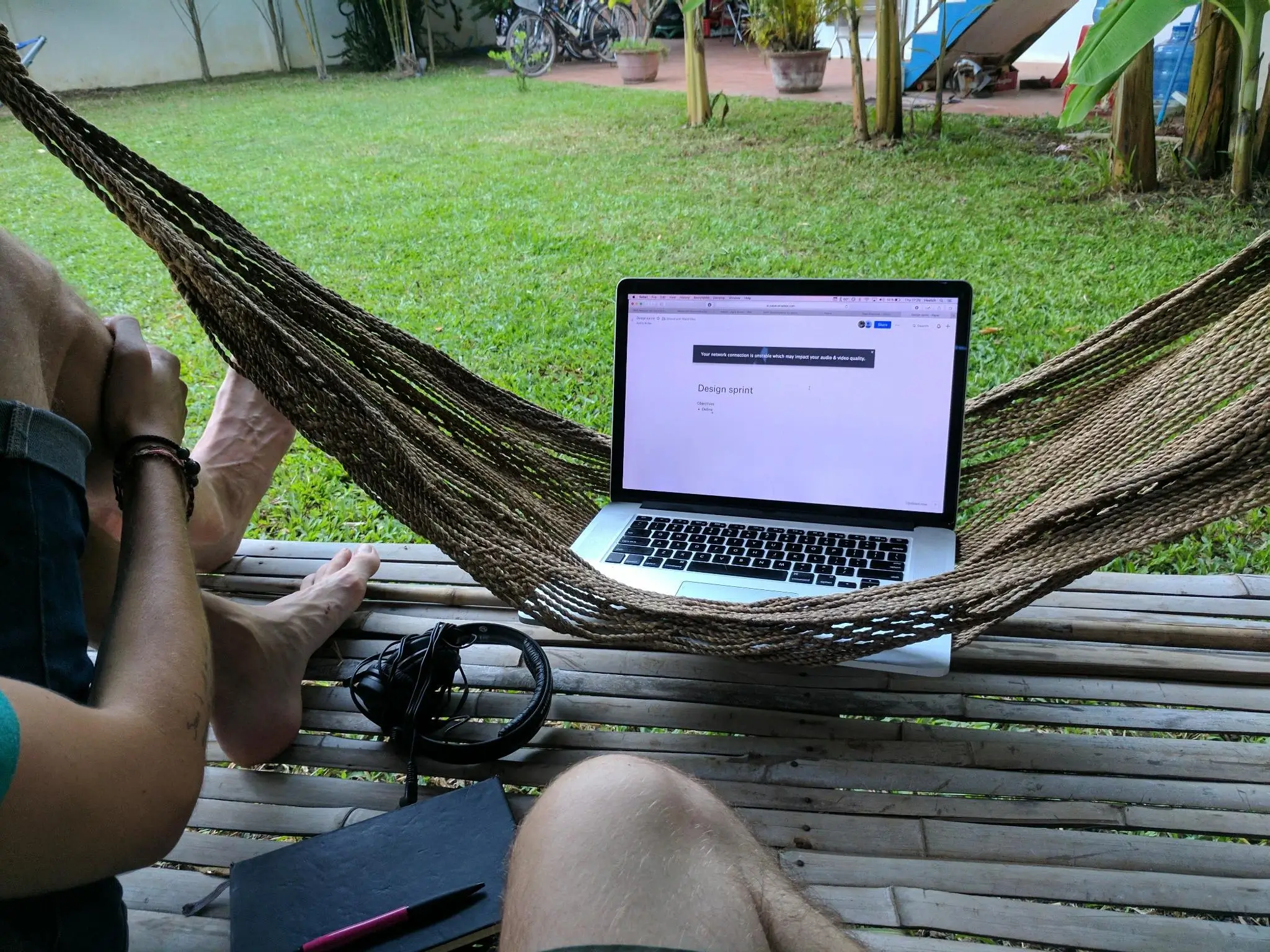
A Day That Belongs to Me
If it rains heavily in Strasbourg, I start working. When it stops—perhaps around ten—I walk my dog. Then I go to the bakery, eat a pain au chocolat, and have a second coffee.
I have no morning routine, no sophisticated productivity system, and usually no to-do list. I go by feel. After twelve years of remote work, I haven't learned how to organize every minute of my life. I've learned that I don't have to.
This is what remote work means to me. It isn't about saving thirty minutes of commuting or performing the same schedule from a spare bedroom. It means ordinary decisions about my day belong to me.
Remote work should be lived as a lifestyle, not handed out as a perk.
The Office I Chose
I wasn't escaping a bad office. I had spent three years commuting to one in Lille, and it was actually pretty good.
Then I found my first job as an Android developer at Heetch. The position happened to be remote. Six months later, I moved to Cambodia. I would spend almost the next ten years in Asia, and I never returned to office work.
Moving to Cambodia meant stopping everything in France and beginning again in Siem Reap.
My new home had no reliable internet, comfortable chair, or desk. Before I could enjoy the freedom to work anywhere, I had to find somewhere I could actually work.
I found AngkorHUB, a tiny coworking space with perhaps ten or fifteen people.
This was before coworking and digital nomadism became an industry. There were small events, cheap beers, and people who came to work, build things, and hang out without much complication.
Connection happened naturally because the community was small and tight. The same ten or fifteen people kept showing up.
We worked, built things, held small events, and often ended up drinking beers at a nearby bar for less than a dollar each.
Remote work had removed the mandatory office, yet I had voluntarily found another shared workplace. The difference was authorship: I could choose the place, the people, and the shape of my day.
AngkorHUB was only the beginning. For the next few years, I moved around constantly. I was happy to break my back on a random chair and tolerate unstable internet because the life surrounding the work was fun.
I didn't need a home office. Inconvenience was part of the adventure.
The Beach Wasn't the Problem
One of my Heetch coworkers watched this life from a distance. He was the iOS developer; I was the Android developer. Eventually, I convinced him to join me in Thailand.
We travelled around Asia together for six months. A working relationship became one of my strongest friendships, and the experience changed his life too: eventually, he left tech entirely to pursue a nomadic life without the laptop.
Later, the same friend and I were together in Bali while our company went through a crisis.
On a screen, we could see everyone in the Paris office working frantically. In the confusion, they had more or less forgotten that we existed, so we sat on the beach drinking beers.
It looked terrible. But most of the crisis synchronization was happening inside the office. The remote team received perhaps ten percent of the information.
Even remote employees elsewhere in France knew too little to help. The beach wasn't the reason we were disconnected. The room was.
Hybrid organizations reveal their true operating model during a crisis. When pressure rises, information follows the office rather than the org chart.
A remote policy is not enough. If consequential information still moves through overheard conversations and unrecorded meetings, remote employees are present on paper and absent in practice.
A genuinely remote company is not an office reproduced through a screen. It is an operating model built around independent people, clear ownership, trust, and low coordination cost.
When you need somebody, you send a simple message and trust that the thing will happen. You do not schedule three meetings to discover who needs what. The unit of remote work is not attendance. It is a promise made and kept.
Working from Asia for a European company can be paradise. The entire morning is protected because nobody is awake to ping you. You focus in peace, then use the afternoon to synchronize with whoever you need.
A small overlap forces clarity. It is a myth that most coworkers need continuous access to one another for eight or nine hours a day. The time-zone gap protects focus; the overlap protects coordination.
Settling Without Giving Up Freedom
After a few years of movement, I wanted a large screen, a comfortable chair, a good desk, and everything permanently in its place. No more searching for Wi-Fi or hunting for power outlets.
I settled in Bali for seven years. The adventure did not end, but inconvenience stopped being the point.
Settling down did not isolate me. After years of coworking and seven years in Bali, I had enough friends to satisfy my social needs. I could enjoy being an introvert in my cave because a social world already existed outside it.
The home office was comfortable, but it wasn't a prison. Comfort only becomes isolation when there is nowhere—and nobody—to return to.
During COVID, I was stuck in Bali. With the traffic and pollution suddenly gone, the island felt like paradise, but very few people remained.
In Ubud, Tinder seemed to contain perhaps five profiles. Luckily, one belonged to the woman who became my wife. We moved into a house together fairly quickly and stayed in Bali through the pandemic and beyond.
When people ask what remote work made possible, the largest answer is not travel. I met the person I married because my work allowed me to build a life in Indonesia.
Perhaps the deepest effect of a lifestyle is not what it lets you do, but whom it causes you to meet.
What Doesn't Travel
Eventually, France seemed worth trying. I could spend more time with my family, and my wife could experience living in France and discover Europe.
We were also growing tired of Bali's pollution, crowds, and traffic. There was no dramatic break. We simply needed a change, so we moved to Strasbourg.
In Bali, seeing friends required almost no activation energy. I could jump on my scooter and be drinking a beer with them two minutes later. I could wake up, notice a coworking event, and simply go.
In Strasbourg, I have barely met anyone—largely because I have barely tried. That is part of the point.
Here, socializing feels like something I must deliberately organize, and remote work gives an introvert no built-in reason to overcome that inertia.
My employment moved easily. My accumulated community did not.
Community was not the only thing that became harder to carry forward. I never played the career game: junior developer, senior developer, lead, staff. I followed curiosity instead, eventually leaving Android development for blockchain.
That gave me interesting work, but also unreliable companies, disappearing projects, and volatile income. Optimizing for freedom and optimizing for career legibility are not always the same decision.
Today, finding any developer job is difficult. Finding a remote one can feel almost impossible. A listing can attract hundreds of candidates, and ordinary reliability is nearly invisible inside that pile.
I should have built more of my reputation in public. Good work earns trust from people who already know you. A public body of work helps that trust travel to people who do not.
I would not exchange this life for a better career ladder. But I would have built a stronger economic floor beneath it.
Building the Next Version
Partly because of that struggle, I am now building Fond.kitchen, a cooking app, with a cofounder. The product began as something I wanted for myself, but it also became a chance to create work on our own terms.
If the company grows, it will obviously be remote: independent people, useful calls rather than habitual meetings, and freedom over the shape of the day.
Remote work began as freedom from the office. Entrepreneurship is becoming an attempt at freedom from the remote job market.
Tomorrow, if it rains, I will work until it stops. Then I will walk the dog, go to the bakery, and have a second coffee.
It looks like a small freedom. But twelve years of choices like that led from Lille to Cambodia, from Cambodia to Bali, to friendships, a wife, Strasbourg, and now a company of my own.
Remote work didn't merely change how I work. It defined my whole life.